




Farcaster Data Analysis: DEGEN Becomes the Most Frequent Term in the App, Long-form Content is More Preferred
Sep 13, 2024 02:52:39


Written by: Sid Shekhar
Compiled by: Deep Tide TechFlow
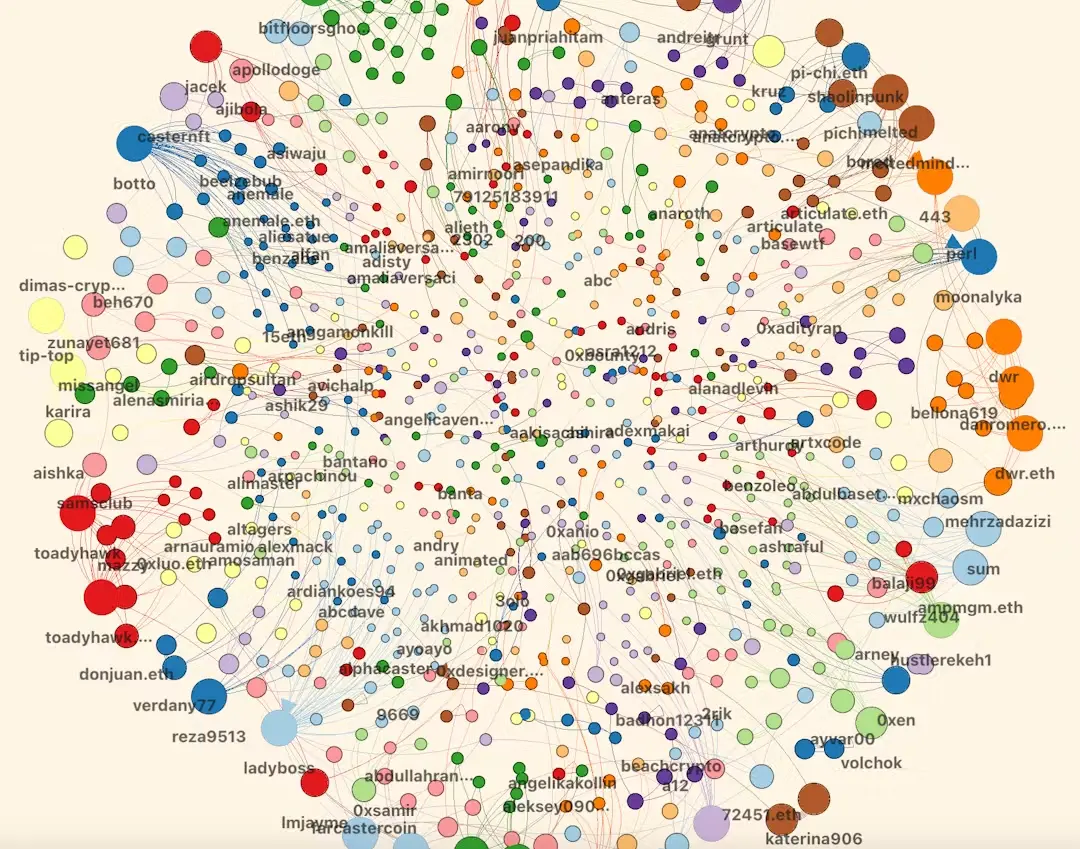
Reactions on Farcaster over the past week
Cryptocurrency has always been a community-driven movement. The community defines the meaning within this industry—whether Bitcoin is seen as a hard asset meme or NFT projects are hailed as the next global IP after Pokémon and Barbie.
Communities formed around these assets gather around shared focal points of interest, creating a vibrant, albeit transient, ecosystem. These formations, while captivating, often face the inevitable dilemma of shifting interests, declining engagement, and loss of attention.
The transience of attention within these groups highlights a significant challenge: how to maintain long-term engagement.
How does Farcaster keep people engaged?
Farcaster now boasts over 200,000 users, interestingly, even with the hockey-stick growth influenced by the Frame craze this month, daily posting numbers and engagement have not significantly declined. Cryptocurrency applications typically aim for profit (users striving for the next 10x or airdrop), but Farcaster has a different "vibe."
I delved into the open-source publishing data to quantify what and who drives this vibe. Here are some of my favorite "portraits" of Farcaster users (along with some interesting statistics):
Questioners
Nearly 38% of those who participated in voting have posed questions online. These questions are not ordinary; they often carry profound meanings. Fundamentally, users are interested in others' opinions and invite them to engage in dialogue. In terms of numbers: there are nearly 400,000 posts containing questions, accounting for about 6% of all posts!
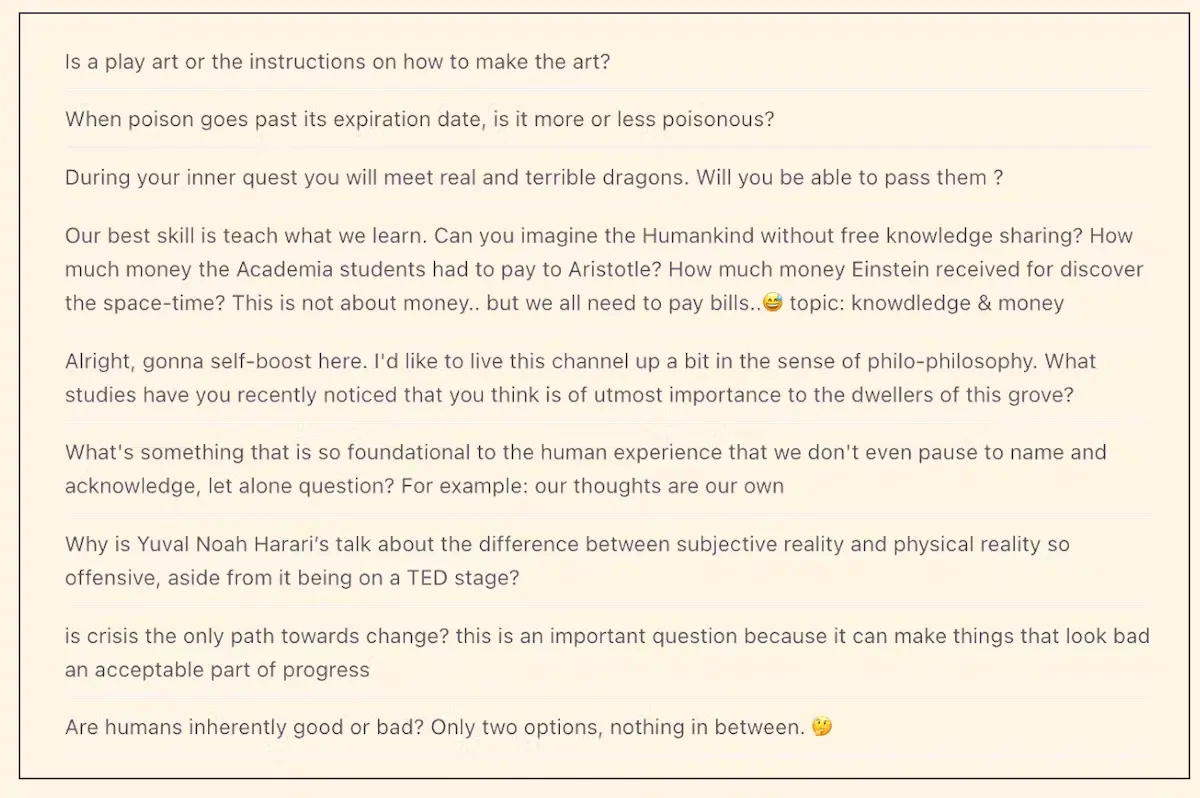
Selected questions from the /philosophy channel
The image above showcases selected questions from the ++philosophy++ channel.
Responders
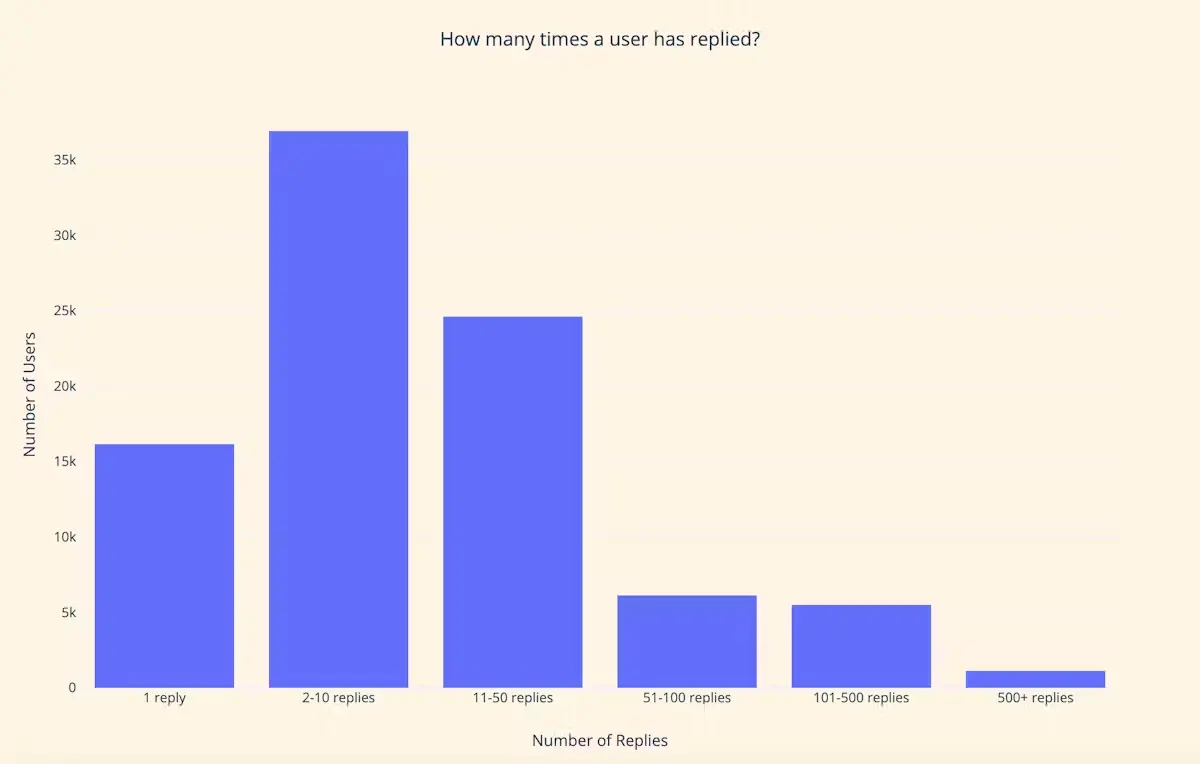
In the spirit of replyguys, as much as 64% of posts on Farcaster are replies. When grouping users by the number of replies, most users seem to belong to the category of multiple responders (as shown below), with some extreme responders having replied thousands of times (just after a few weeks of activity).
Long-form content is favored
We know that publishers are avid readers. It turns out that the entire network also enjoys long-form writing in posts. Data shows that post length is significantly correlated with user engagement: longer posts typically receive more likes and shares. Although the character limit for each post is generally around 320 characters, the data tells us that depth and detail resonate more with the Farcaster audience.

Tippers
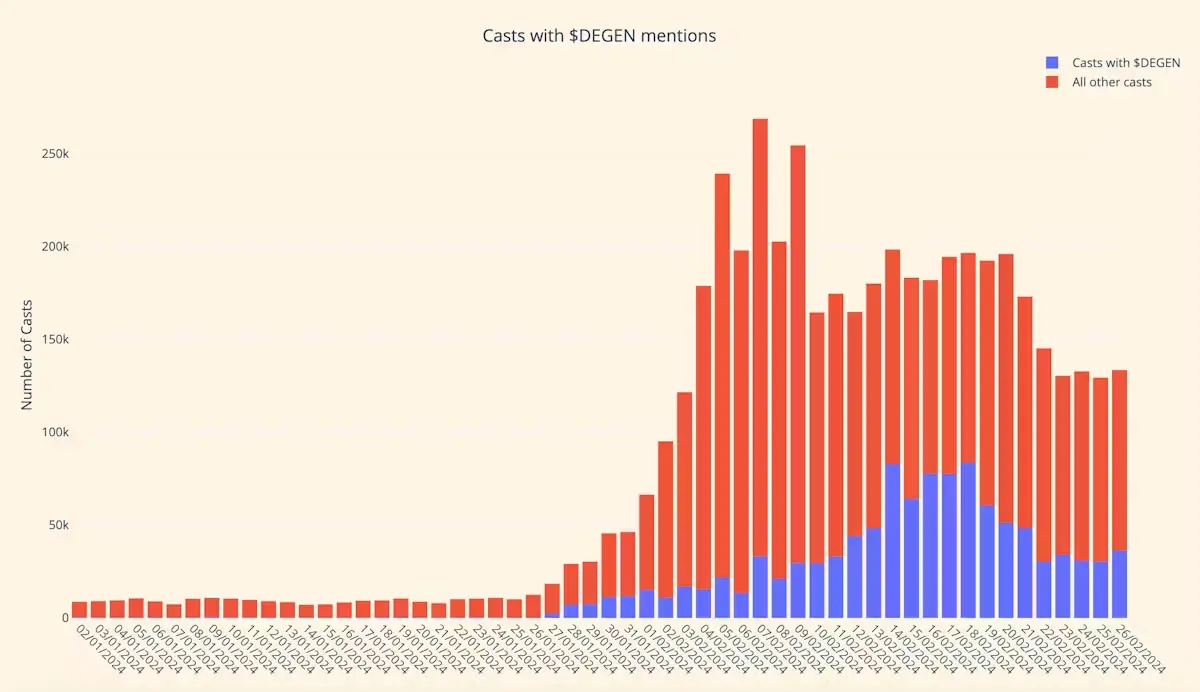
Last week, a friend and I decided to connect to the real-time publishing stream of Farcaster Hub. After running it for a while, we realized that most of our screen was filled with $DEGEN.

Real-time source from Farcaster Hub to GRPC subscription
So far, the most used word on Farcaster is $DEGEN, primarily used as a tipping currency (people can reply to a post with a number and $DEGEN to tip the publisher). While projects like Steemit do have the functionality to pay symbolic amounts for posts, tipping on social media content has yet to be explored and succeed on a large scale.
Some high-level statistics about this phenomenon:
Over 37,000 users have voted for $DEGEN at some point, with nearly 16% of votes including "$DEGEN."
Builders
Finally, let's talk about the gorilla in the room. The launch of Frames and the frame-ification of NFTs, applications, games, etc., have unlocked a plethora of creative and interesting experiences for users and developers on the Feed. Not only has the number of posts with Frames surged this year (see below), but in 2024, posts with Frames accounted for nearly 22% of all likes on Farcaster.
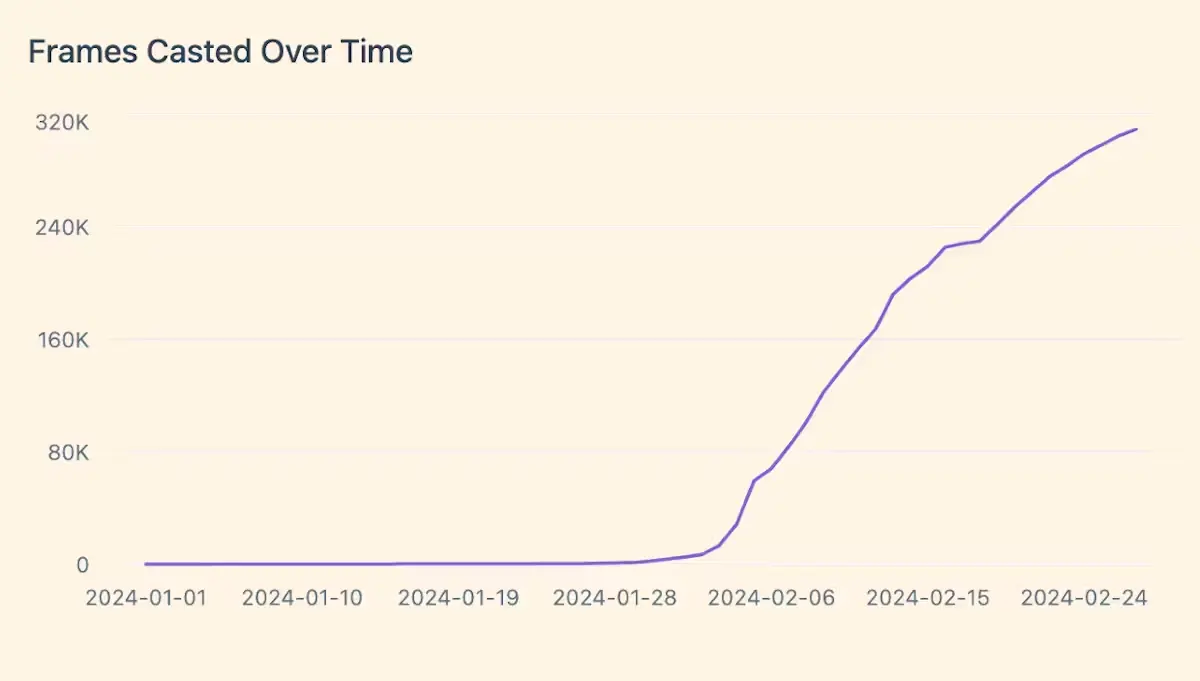
Source: https://frames.spindl.xyz/
Some takeaways
a) At this stage of growth, what keeps engagement on Farcaster is a core culture of people generously sharing their questions, answers, likes, tips, and thoughts. Deep engagement > shallow engagement.
b) The underlying protocol and its social graph are open and analyzable, which is fantastic.
I may delve deeper into more such data, including the evolving channel landscape and how niche communities begin to merge and develop.

Related Projects

Latest News
Dec 02, 2025 03:00:09
Dec 02, 2025 03:00:07
Dec 02, 2025 02:30:27
Dec 02, 2025 02:30:25
Dec 02, 2025 02:21:37