








Capital Variations under Triple Games - From AI Interlocking, Politicized Easing to Rebuilding Trust in Cryptography
Feb 10, 2026 09:37:57


Author: Proton Capital Research Team
I. Abstract
This report focuses on three interwoven and evolving main lines: the structural changes in the AI investment cycle, the marginal shift in the politicized liquidity environment, and the repricing process of crypto assets under repeated trust shocks.
AI remains the core direction of global capital expenditure, but the logic of returns is shifting from "computing power expansion" to "application and cash flow realization." While capital expenditure remains high, the market's demands for efficiency, commercialization pathways, and sustainable profitability have significantly increased, leading to rising differentiation risks within related assets. At the macro level, changes in the liquidity environment are more likely driven by fiscal and political constraints rather than traditional economic cycles. Against a backdrop of high debt and policy constraints, expectations of easing provide only temporary support for risk assets, making it difficult for volatility to systematically decline. The crypto market is evolving from high beta risk assets to structural asset differentiation. In an environment where trust constraints are reinforced, funds are more inclined towards targets with clear value consensus, institutional pathways, and controllable risks, rather than a broad increase in risk appetite. At the portfolio level, we maintain a defensive stance, emphasizing structural opportunities. The current phase places greater importance on risk management, scenario simulations, and internal rotation opportunities, rather than single directional bets.
II. Review of the Global Major Asset Performance Overview for 2025

Table 1: Global Major Asset Performance
The global financial market in 2025 exhibited significant "tech bull market" characteristics under the wave of artificial intelligence (AI). Beneath the feast, the cryptocurrency market showed a notable "cooling" and divergence. The core reason lies in the dual suppression of macro stagflation risks and sudden black swan events, completely overshadowing the long-term benefits brought by the deepening of market structure (institutionalization, compliance). In 2026, multiple fundamental, macro policy, and geopolitical variables are quietly changing, indicating that the investment environment in 2026 may be more complex.
The current fundamentals present a complex picture of "new and old momentum transition" and "risk event overlap."
1. Physical Demand and Stock Market Drive for AI: The exponential growth of AI technology from training to deployment has not only driven up the valuations of related tech stocks but has also generated tangible demand for non-ferrous metals through hardware investments (data centers, servers, chips), particularly creating new long-term demand support for copper (power infrastructure), aluminum (heat dissipation and structure), and rare earths (permanent magnet motors and special materials), injecting growth logic into traditional cyclical sectors.
2. Structural Risks Give Rise to Demand for Safe-Haven Assets
De-dollarization and Sovereign Risks: The continuous deterioration of the U.S. fiscal deficit has weakened the foundation of dollar credit, compounded by the normalization and complexity of geopolitical conflicts (such as Russia-Ukraine, Middle East), which has once again highlighted the monetary attributes and safe-haven functions of traditional precious metals like gold. Central bank gold purchases and private savings demand together form a solid bottom for prices.
Uncertainty in Trade Policies: Although the global tariff war has temporarily subsided, the soil for trade protectionism remains fertile. Recently, discussions around Greenland's resources (potentially involving rare earths and other key minerals) have seen Trump once again wielding the tariff stick for verbal pressure. This kind of "verbal intervention," while not necessarily leading to immediate legislation, significantly increases the assessment costs and uncertainties of global trade and supply chains, suppressing corporate capital expenditure willingness and potentially boosting safe-haven sentiment in the short term.
3. The "Cooling" of the Cryptocurrency Market
Comprehensive Positive Factors Fail: Milestone developments such as ETF expansions and stablecoin legislation should have brought long-term funds to the market. The Fed's passive interest rate cuts highlight the "stagflation" dilemma, weakening the attractiveness of crypto assets as risk assets. The black swan event on October 11 (a large-scale trust crisis involving centralized exchanges/custodians, such as asset freezes or massive losses involving major compliant custodians) directly struck at the core foundation of the institutionalization process—asset security and custodial trust.
Complete Reversal of Fund Flows: The event triggered a chain reaction, leading to large-scale and sustained net outflows from Bitcoin spot ETFs. Institutional funds not only adopted a cautious attitude but were also forced to withdraw due to risk control requirements, with the market rapidly deteriorating from "incremental speculation" to "existing stock sell-off."
III. 2026 Macro Outlook: The Triple Game of High Valuations, Policy Dilemmas, and Political Cycles
In 2026, the global macro landscape will revolve around three main lines: growth verification, policy games, and political disturbances, with the market continuing to oscillate under the influences of valuation pressure, fiscal-monetary dilemmas, and election cycles.
1. AI Valuation: From Expectation Frenzy to Reality Testing
The significant rise of the AI sector driven by optimistic expectations in 2025 will face fundamental verification in 2026. The focus will be on:
Commercialization landing: the breadth and depth of product applications;
Profit quality: sustainability of growth and actual profit margins. If performance cannot match the current high valuations, the valuation system based on future cash flow discounting will face severe challenges, potentially triggering significant corrections in tech stocks and transmitting to global risk appetite.
2. U.S. Fiscal-Monetary Dilemma: Deficit Politics and the Crisis of Fed Independence
The massive fiscal deficit is essentially a political choice, with solutions concentrated on:
Fiscal tightening (facing political resistance);
Debt monetization (eroding central bank independence);
Promoting economic growth to expand the tax base (slow to take effect, high difficulty). While interest rate cuts may alleviate the pressure of national debt interest, they will make the Fed's monetary policy passively serve fiscal needs, struggling to balance "anti-inflation, stable employment, preventing financial risks, and ensuring fiscal sustainability," putting its policy independence under severe test.
3. 2026 U.S. Midterm Elections: Prelude to October Surprises and Aggressive Foreign Policy Strategies
To secure votes, the Trump administration may adopt a more provocative "spotlight" strategy in diplomatic and economic fields:
Hardline diplomatic stance: demonstrating a tough position on resource and strategic issues in Venezuela, Greenland, etc., to consolidate the "strong leader" image;
Extreme economic pressure: restarting or threatening to impose tariffs on major trading partners to attract blue-collar voters and divert domestic conflicts.
4. Cryptocurrency: The Path of Repair and Revaluation
The "October 11 black swan event" has stress-tested the cryptocurrency market in the institutionalization process, shifting the market's main line from "liquidity-driven" to "trust repair" and "infrastructure revaluation."
Short-term (until the first half of 2026): The market enters a phase of oscillation and confidence repair. Regulations are expected to strengthen custodial and reserve proof rules, with increased attention to decentralized custody and self-custody solutions.
Medium to long-term: Only when macro liquidity expectations shift towards easing and the market proves it has built a more robust infrastructure will institutional funds cautiously return. At that time, rebounds may focus more on core assets with true decentralized attributes and clear practical value (such as Bitcoin and Ethereum).
IV. The U.S. AI Market Under Capital Interlocking: Risks of Bubble Formation and Three Evolutionary Paths
The current U.S. AI market is still in the bubble formation stage and has not yet entered the bursting phase, but it has entered a high-risk expansion period. The market exhibits a clear capital interlocking structure, the stability of which will be key in determining whether the bubble continues or faces adjustments.
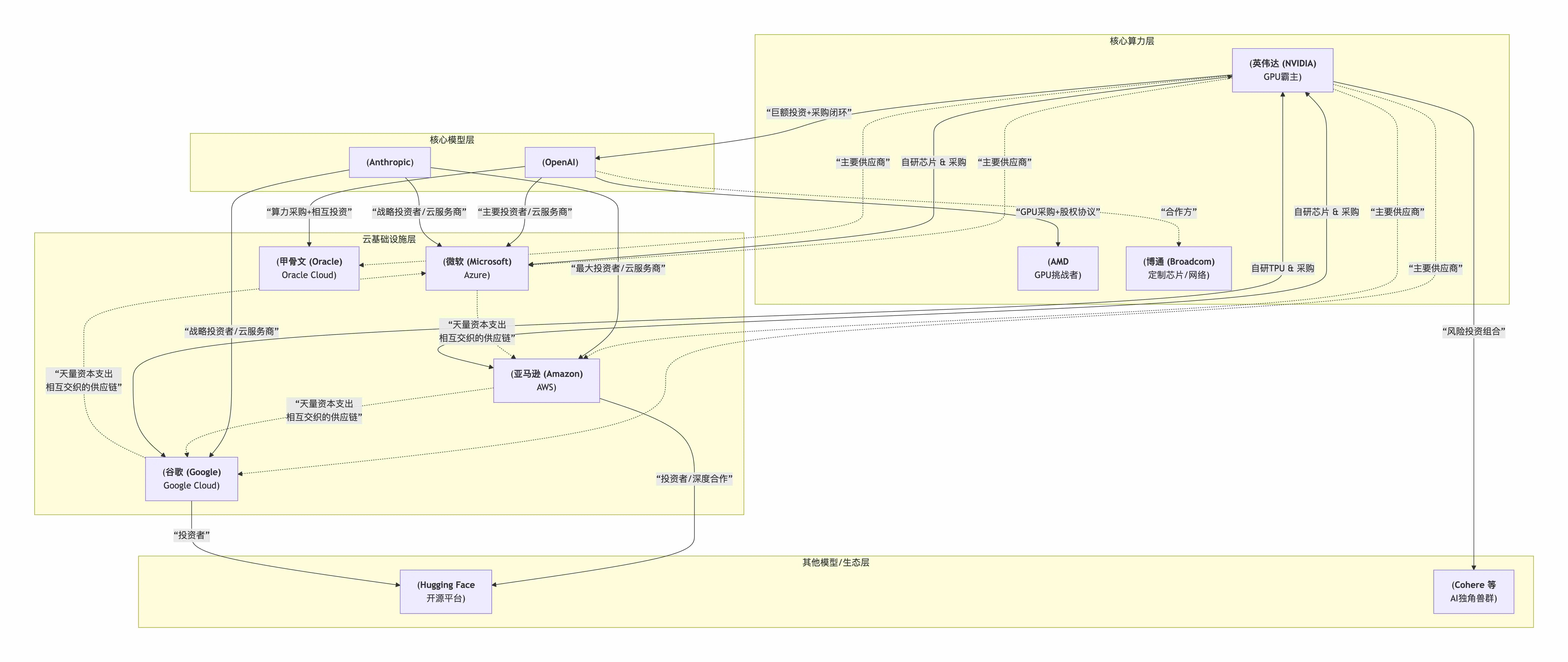
Figure 1: Overview of AI "Capital Interlocking"
The core of capital interlocking is a closed loop of "investment → procurement," where funds ultimately flow back to investors in the form of operating income, supporting stock prices and the next round of investment.
The relationship between giants has transcended simple buying and selling, forming a symbiotic network of risk-sharing and benefit-sharing tightly interwoven through capital, orders, equity, and long-term agreements.
These interlocking relationships are not only present in the triangle of OpenAI-NVIDIA-Oracle but are also widely found among almost all core AI players, including Amazon, Google, Microsoft, NVIDIA, AMD, and Broadcom, creating an ecosystem where "one prospers, all prosper; one suffers, all suffer."

Table 2: AI Investment Data for 2025 and Predictions for 2026
U.S. AI investment in 2026 is likely to continue high growth due to technological competition, national strategy, and economic growth demands, especially in capital expenditure by giants. However, this is no longer simply "quantity" growth; the market will focus more on the core characteristics and corresponding market logic of three potential scenarios:
Analysis of Three Potential Market Scenarios

Table 3: Scenario Analysis
1. Scenario One: Application Explosion, Bull Market Continues
This is the script of technological optimists. The driving factors are not limited to capital expenditure; more importantly, AI begins to integrate into workflows on a large scale and create cash flow. Typical signals include: Microsoft, Adobe, and other software giants exceeding expectations in AI feature subscription revenues; a significant increase in the proportion of inference business in NVIDIA's data center revenues; and continued growth in capital expenditure due to strong demand (such as Citigroup's forecast of $490 billion).
2. Scenario Two: Narrative Disproved, Valuation Adjustment
This describes a scenario of market confidence collapse. The root cause lies in the unwillingness or inability of downstream (enterprises, consumers) to pay after high investments. Early signs are already evident: Gartner points out that AI will enter a "bubble burst trough" in 2026, with enterprises placing more emphasis on verified results. A hallmark of this scenario will be significant reductions in capital expenditure plans by giants like M7, as well as IPOs of AI companies experiencing price declines and continued sluggishness.
3. Scenario Three: Increased Differentiation, Complex Progress (Most Likely)
This is a chaotic period of industrial development. In this scenario, the market lacks a single main line; the key is to identify winners and losers amidst differentiation. For example:
Structural opportunities: AI spending will be realized more through existing software suppliers rather than independent projects; the penetration rate of "embedded" passive AI applications (such as AI search summaries) will far exceed that of independent AI applications.
Key contradictions: The industry faces challenges of "high costs, high illusions (such as 'unreliable output'), and low retention," as well as bottlenecks in user trust in AI-generated information.
Market response: Financial report data from companies like NVIDIA (such as revenue growth but slowing growth rates, fluctuating gross margins) will amplify market sentiment.
V. Political Drivers and Structural Evolution: 2026 Liquidity Environment Outlook
The core logic of the Trump administration's layout around the Fed's personnel, midterm elections, and cryptocurrency market expectations can be summarized with the following timeline:

Figure 2: Timeline of Fed Personnel Layout, Midterm Elections, and Market Impact
The driving logic of the current U.S. liquidity environment can be summarized as: multiple forces are pushing for the formation of a "loose but complex" liquidity environment, characterized by "strengthened political driving" and "intensified market games." This environment is particularly influenced by the deep reliance of the U.S. technology and AI industries on abundant liquidity, which requires low interest rates and loose financial conditions to maintain high valuations, support continuous financing and capital expenditure, thus becoming an important pillar for the stock market, especially the Nasdaq.
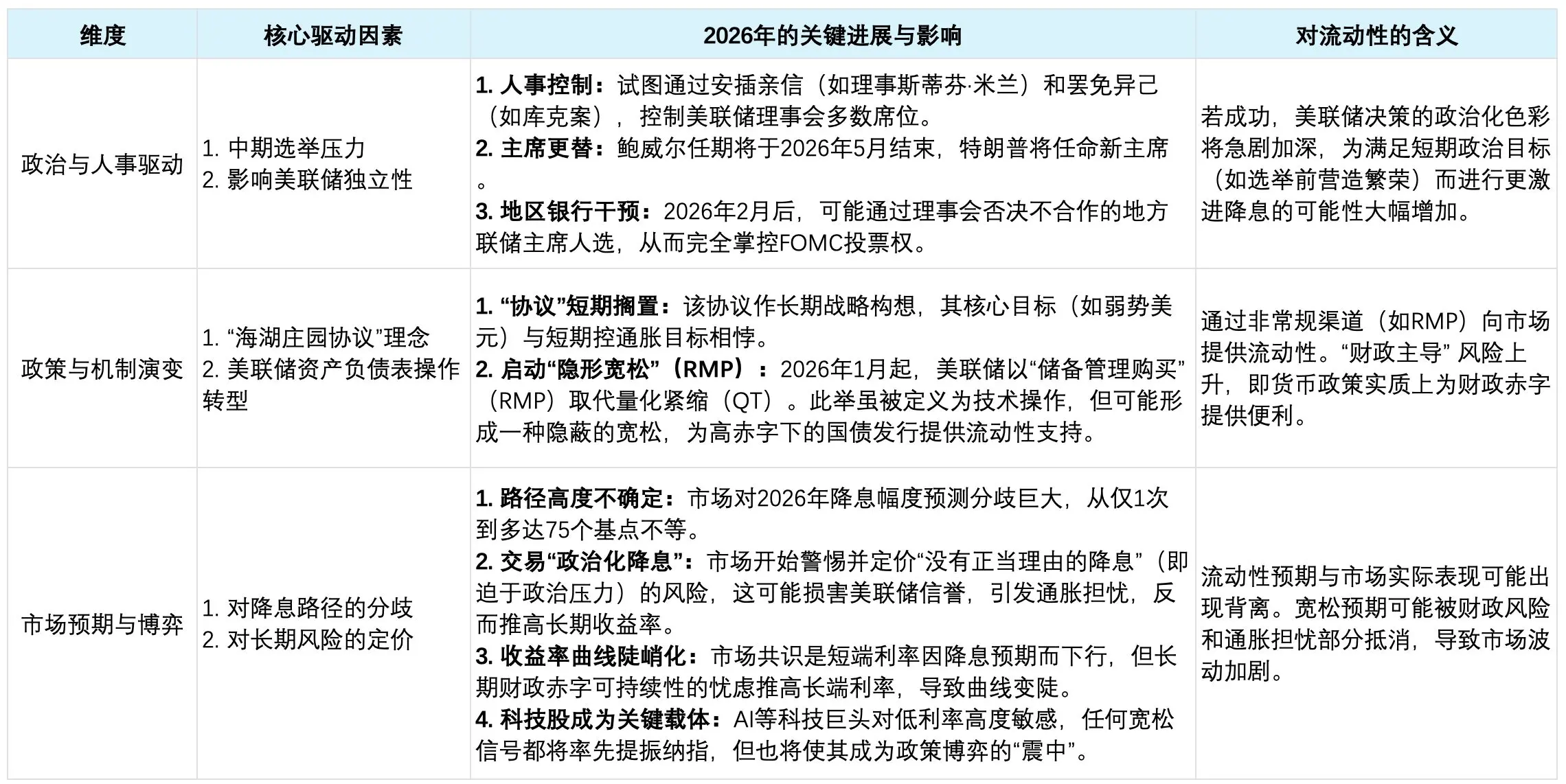
Table 4: 2026 U.S. Liquidity Environment: Core Drivers, Progress, and Impact
Short-term (until mid-2026): Liquidity tends to loosen, but the market will oscillate violently between optimistic expectations of "politicized interest rate cuts" and deep concerns about inflation rebounds and dollar credit damage. Tech stocks are highly sensitive to interest rate policies; any signals of rate cuts may boost growth sectors like AI. The Supreme Court's ruling on the "Cook case" will become the first important weather vane, testing whether the Fed's independence can withstand direct intervention.
Medium-term (second half of 2026 until the election): If political intervention is successful, the Fed may initiate a rate-cutting cycle beyond economic fundamentals, bringing strong liquidity impetus. This will significantly benefit tech and AI companies by lowering financing costs, enhancing valuations, and supporting stock market sentiment. However, it may also exacerbate asset bubbles and stagflation risks, laying the groundwork for policy reversals after 2027.
Overall, the U.S. liquidity environment in 2026 is not a simple "flooding," but rather a complex situation shaped under strong political objectives, mixed with personnel control, RMP, and traditional interest rate cuts, overall tending towards looseness. The intrinsic demand for liquidity from the technology and AI sectors resonates with the tendency for easing under the political cycle, further reinforcing the stock market's, especially tech stocks', dependence on policy paths, while also increasing the market's oscillation characteristics between short-term excitement and long-term risks.
VI. Cryptocurrency Market: From Trust Freezing Point to Repairing Rebalancing
In 2025, the cryptocurrency market significantly "cooled" under the dual blows of macro pressure and internal structural crises, leading to a historic shift in fund preferences. Looking ahead to 2026, the market will enter a complex reconstruction period characterized by trust repair and capital rebalancing.
1. Fund Migration, Trust Crisis, and Liquidity Exhaustion
Phenomenal Fund Transfer
The cryptocurrency market has sharply contracted: taking the South Korean market as an example, the daily trading volume of its largest exchange, Upbit, plummeted from about $9 billion in December 2024 to $1.78 billion in November 2025, a drop of 80%. The second-largest exchange, Bithumb, also saw its trading volume shrink from about $2.45 billion to $890 million, a decline of approximately 69%. Market volatility and the "kimchi premium" have nearly disappeared, indicating a complete retreat of speculative sentiment.
Funds have massively shifted to traditional assets: the outflowing funds have surged into the South Korean stock market, which is experiencing an "epic bull market." In 2025, the KOSPI index in South Korea soared over 72%, reaching an all-time high. The narrative of AI semiconductors (such as SK Hynix's 240% surge within the year), domestic policy reforms, and capital seeking profit have jointly driven this historic fund migration, putting crypto assets at a disadvantage in the competition for funds.
The "October 11 Black Swan" Triggered a Systemic Trust Crisis
A significant risk event involving centralized institutions severely undermined market trust in custodial safety and the institutionalization process. This was not just price volatility but a profound systemic trust shock, leading to fundamental changes in market sentiment and fund structure.
Institutional Passive Withdrawal and Malicious Liquidity Cycle
After the "October 11" event, institutional funds were forced to withdraw due to internal risk control models, causing the market to shift from "incremental push" to "existing stock sell-off." Meanwhile, new project listings and continuous VC unlocks formed a "liquidity siphon," continuously diluting existing funds and leading to a systemic decline in market valuation centers.
2. Pathways for 2026: Macro Breathing Space, Industry Reconstruction, and Potential Turning Points
Macro Environment: Providing Oscillating Bottoms, Not Bull Market Fuel
The U.S. political cycle in 2026 (midterm elections) will strongly influence monetary policy, leaning towards a "loose but complex" liquidity environment. This can provide bottom support and phase rebound opportunities for the crypto market, but the path will be accompanied by oscillating expectations, making it difficult to sustain a one-sided trend of significant rises.
Industry Core: From Speculative Ruins to Value Reconstruction
The market's deep cooling is forcing the industry to undergo "constructive corrections." Regulations will strengthen rules on custody and reserve proof, with increased attention to decentralized and self-custody solutions. The industry's focus will shift from chasing bubbles to verifying the robustness of infrastructure and real utility.
Core Turning Point Simulation: AI Narrative and Crypto Market Rebalancing
The current U.S. AI stock market is in a high-risk expansion period. If by 2026, the commercialization of AI does not meet expectations or seems elusive, leading to high-level oscillations or corrections in traditional tech stocks, some funds seeking high volatility returns may reconsider the deeply adjusted crypto market, which is increasingly compliant (e.g., with tools like ETFs). Cryptocurrencies may attract fund inflows due to their differentiated attributes, initiating a valuation recovery driven by trust repair.
VII. Conclusion: Structural Repair, Waiting for the Right Moment
The cryptocurrency market in 2026 is not a year of frenzy but a year of reconstruction. The market will struggle to move forward amidst external macro pulls and internal trust repairs.
Short-term (first half): Expected to primarily oscillate at low levels, with traditional market squeezes and internal liquidity shortages constituting major pressures, while easing expectations can only bring intermittent technical rebounds.
Medium to long-term (second half and beyond): The trajectory will depend on two key factors: first, the actual degree of liquidity easing globally (especially in the U.S.); second, whether the cryptocurrency's own compliance and institutionalization processes can achieve substantial breakthroughs, thus truly entering the traditional capital allocation perspective.
Structural Opportunities: A broad rise is unlikely, and opportunities will be highly differentiated. Focus should be on:
Core assets: such as the safe-haven and consensus value of BTC, ETH, SOL, and BNB.
Compliance narratives: such as RWA (real-world assets) combined with physical assets.
Regional opportunities: such as local dynamics brought about by policy clarifications in key markets like South Korea.
The true systemic opportunities will belong to those assets that prove their resilience during crises, possess clear compliance paths, and have actual value support. The market is accumulating strength for the next cycle, but the prerequisite is to complete the necessary trust rebuilding and structural clearing.
Latest News
ChainCatcher
Feb 10, 2026 15:00:54
ChainCatcher
Feb 10, 2026 14:53:00
ChainCatcher
Feb 10, 2026 14:47:52
ChainCatcher
Feb 10, 2026 14:45:14
ChainCatcher
Feb 10, 2026 14:43:49