








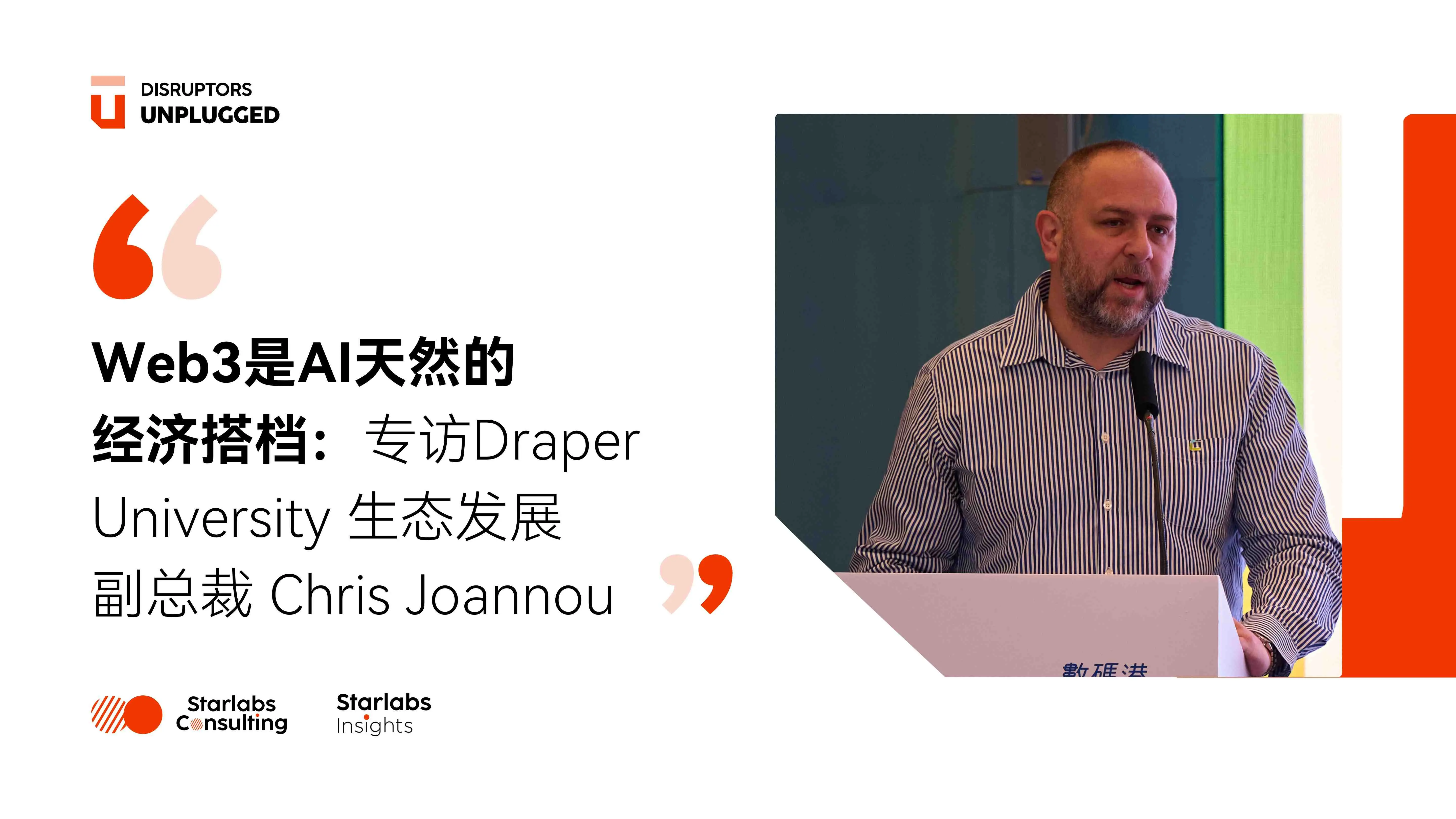
Web3 is the natural economic partner of AI: Interview with Chris Joannou, Vice President of Ecosystem Development at Draper University
Mar 30, 2026 15:32:25


In the current global landscape of entrepreneurship and capital restructuring, the evolution of technological paradigms is profoundly changing the underlying logic of venture capital and enterprise building. AI is transitioning from a tool to a "new infrastructure," gradually becoming the default capability for all innovative projects; meanwhile, Web3 is moving from narrative-driven to practical applications, building the trust and value settlement systems required for the digital economy.
In this round of technological overlap and paradigm shift, AI and Web3 are no longer independent tracks but are gradually forming a highly synergistic relationship—AI is responsible for intelligent decision-making and automated execution, while Web3 provides the underlying support for identity, trust, and value flow. With the rise of the "agent economy," this integration is becoming an important infrastructure for the next generation of the internet. At the same time, in the context of accelerated technological iteration, true competitive barriers are also shifting: from singular technological capabilities to community, brand, and long-term defensible system capabilities.
It is against this backdrop that Chris Joannou, who is active on the front lines of the global innovation ecosystem, has particularly clear insights into this trend.
Joannou is a deal maker, investor, and ecosystem builder active in the global entrepreneurship and investment ecosystem. He currently serves as the Vice President of Venture Ecosystem at Draper University, a top Silicon Valley accelerator and venture capital fund founded by legendary investor Tim Draper, where he is responsible for promoting the collaborative development and strategic cooperation of the global entrepreneurial ecosystem.
He has long established cooperative relationships with governments, large enterprises, and leading blockchain protocols—including Stellar ($XLM), Cardano ($ADA), Algorand ($ALGO), and VeChain ($VET)—to help startups achieve scalable growth and cultivate innovative ecosystems globally. He has also led venture projects with multinational companies such as Nestlé, Mars, and Asahi, and has established collaborations with the Japan External Trade Organization (JETRO), the Malaysia Digital Economy Corporation (MDEC), and Hong Kong Cyberport.
Recently, Jenny Yang, founder of Starlabs Consulting, conducted an exclusive interview with Chris Joannou. In this interview, Joannou shared his insights on the current entrepreneurial and investment landscape, the project selection logic at Draper University, and discussed in depth the impact of geopolitical and market changes on venture capital, as well as the new opportunities brought by the integration of AI and Web3.
The following are excerpts from the interview:
Draper University focuses on accelerating founders with "moonshot" visions
Jenny Yang: You have been deeply involved in the construction of entrepreneurial ecosystems in various regions, from Melbourne to now expanding the global footprint with Draper University. What initially attracted you to the field of entrepreneurship and venture capital? Over the years, what has kept you passionate?
Chris Joannou: Ultimately, it is the privilege of playing a supporting role in the success stories of founders. Being at the forefront of emerging technologies and walking alongside those who are not just dreaming of the future but are actively creating it is captivating and addictive. It is this state of being surrounded by high-risk passion and the ambition to "change the world" that keeps me motivated.
Jenny Yang: You currently serve as the Vice President of the Venture Ecosystem at Draper University, focusing on global partnerships and ecosystem building. How do you define Draper University's role in today's global venture capital and entrepreneurial landscape?
Chris Joannou: Draper University is the ultimate launchpad and incubation engine for the pre-seed stage within the entire Draper ecosystem. We focus on accelerating founders with "moonshot" visions. We are the bridge connecting international entrepreneurs with global opportunities, especially serving deep tech fields, or what we affectionately call "sci-fi level" technology explorers—those technologies that seem far-fetched today but will be indispensable tomorrow.
Founders must build businesses with the premise of "exponential growth curves"
Jenny Yang: You have built founder communities and entrepreneurial ecosystems around the world over the years. In your experience, what role does the ecosystem play in the success of startups? How does it interact with capital, talent, and mentoring resources?
Chris Joannou: The ecosystem is essentially the infrastructure that supports the spirit of adventure. For founders to succeed, they need a forgiving environment—one that allows them to dream boldly without being ridiculed. But this does not arise out of thin air; it requires a conscious "triple helix" collaboration mechanism between government policy, venture capital, and academic or corporate talent. When these stakeholders come together, they lay a foundation that enables startups not only to survive but also to gain the resources and momentum to go global.
Jenny Yang: In the face of profound changes in the global market environment and geopolitical landscape, how do you think these changes are affecting the dynamics of venture capital and the way startups are being built today?
Chris Joannou: Today, founders must build businesses with the premise of "exponential growth curves." If your core value proposition could be replaced by the next AI update or leap in cutting-edge technology, your situation will be precarious. Resilience and customer-centricity are certainly indispensable, but I also firmly believe that community is the ultimate moat. In an era of increasingly powerful automation waves, human-centered networks and deep brand loyalty are far more difficult to be disrupted by technology than mere code.
AI has become the new baseline, optimistic about "human-centered" innovative projects
Jenny Yang: Looking ahead, based on your observations at Draper University and in the global entrepreneurial ecosystem, which technology trends or industry tracks are you most optimistic about in the coming years?
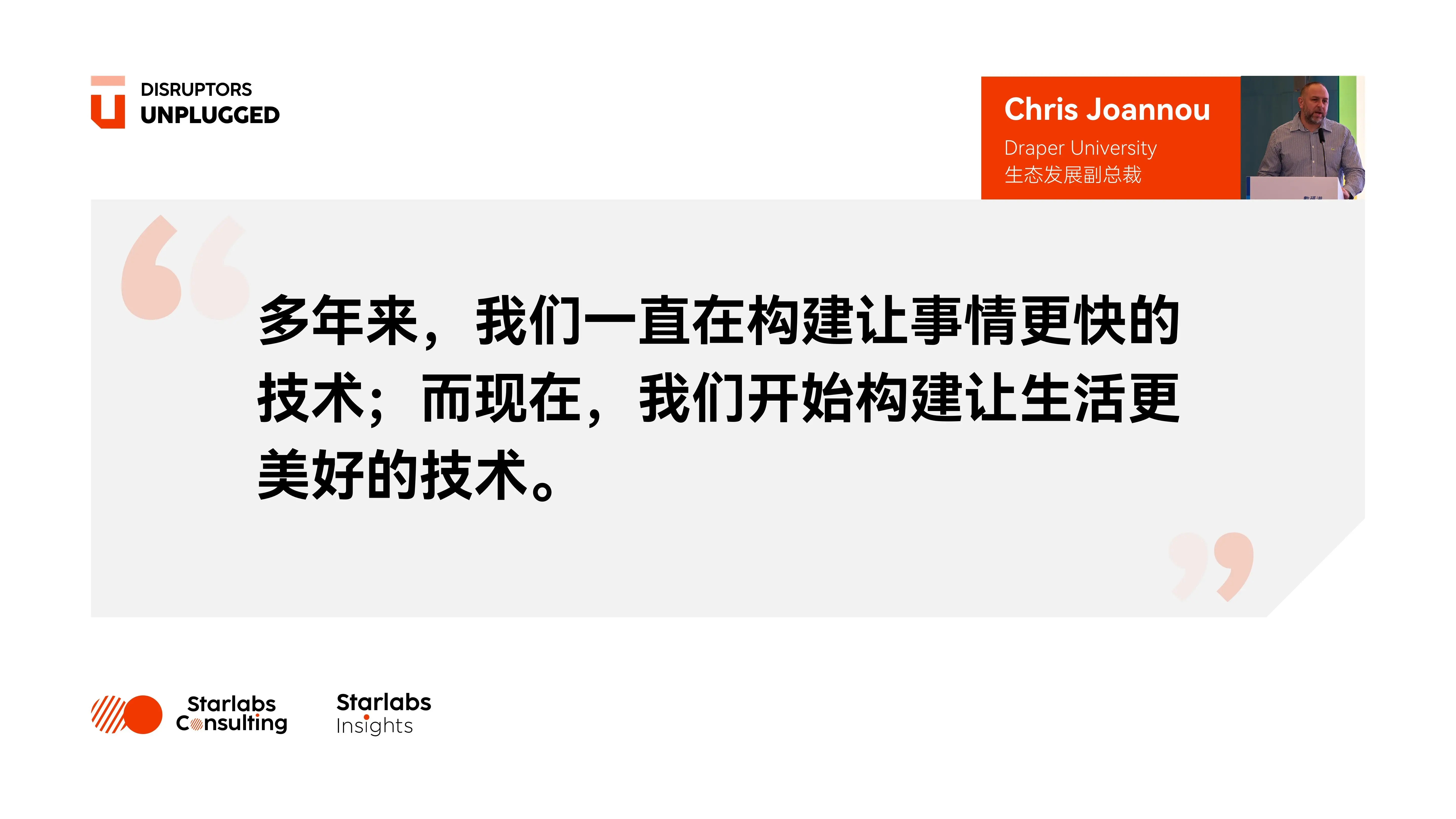
Chris Joannou: I am most looking forward to the paradigm shift towards "human-centered" innovation. For years, we have been building technologies that make things faster; now, we are starting to build technologies that make life better. I am looking for entrepreneurs who take "humanization" as a competitive advantage—startups that can automate the mundane tasks we are tired of, thereby giving us back our most cherished resource—time. Our goal is to move towards a future where people focus on meaningful, creative work rather than just working to make a living.
Jenny Yang: AI has rapidly become one of the most active fields in innovation and investment. What role does AI play in the accelerator and ecosystem projects at Draper University today? Have you observed a significant increase in the proportion of companies focused on AI? What strategic significance does this track hold for you?
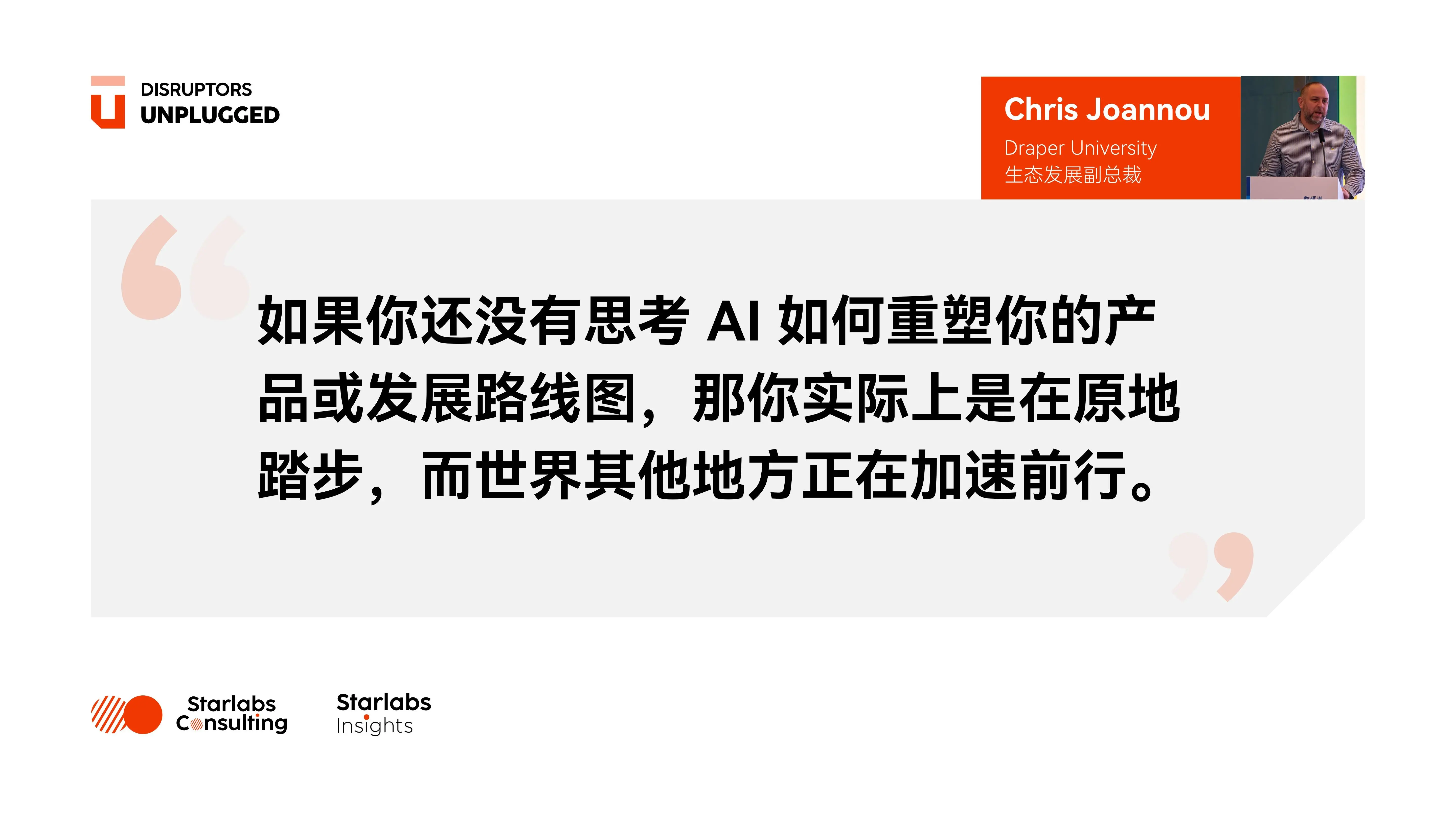
Chris Joannou: AI has become the new baseline—our internal systems at Draper have been fully empowered by AI. Although we have received a large number of project proposals in the AI direction, our focus is on long-term competitive barriers. The risk is not in becoming a "shell application," but in creating products that are merely incremental improvements or easily replicable by industry giants. We are looking forward to startups that use AI to solve deep, complex problems and thereby build lasting moats. If you haven't thought about how AI can reshape your product or development roadmap, you are essentially standing still while the rest of the world is accelerating forward.
Web3 is an indispensable "trust layer" of the next generation of the internet
Jenny Yang: Web3 and decentralized technologies have gone through several rounds of hype and adjustment. How do you assess the long-term potential of Web3? Which tracks or application scenarios do you find most attractive for entrepreneurs in this field?
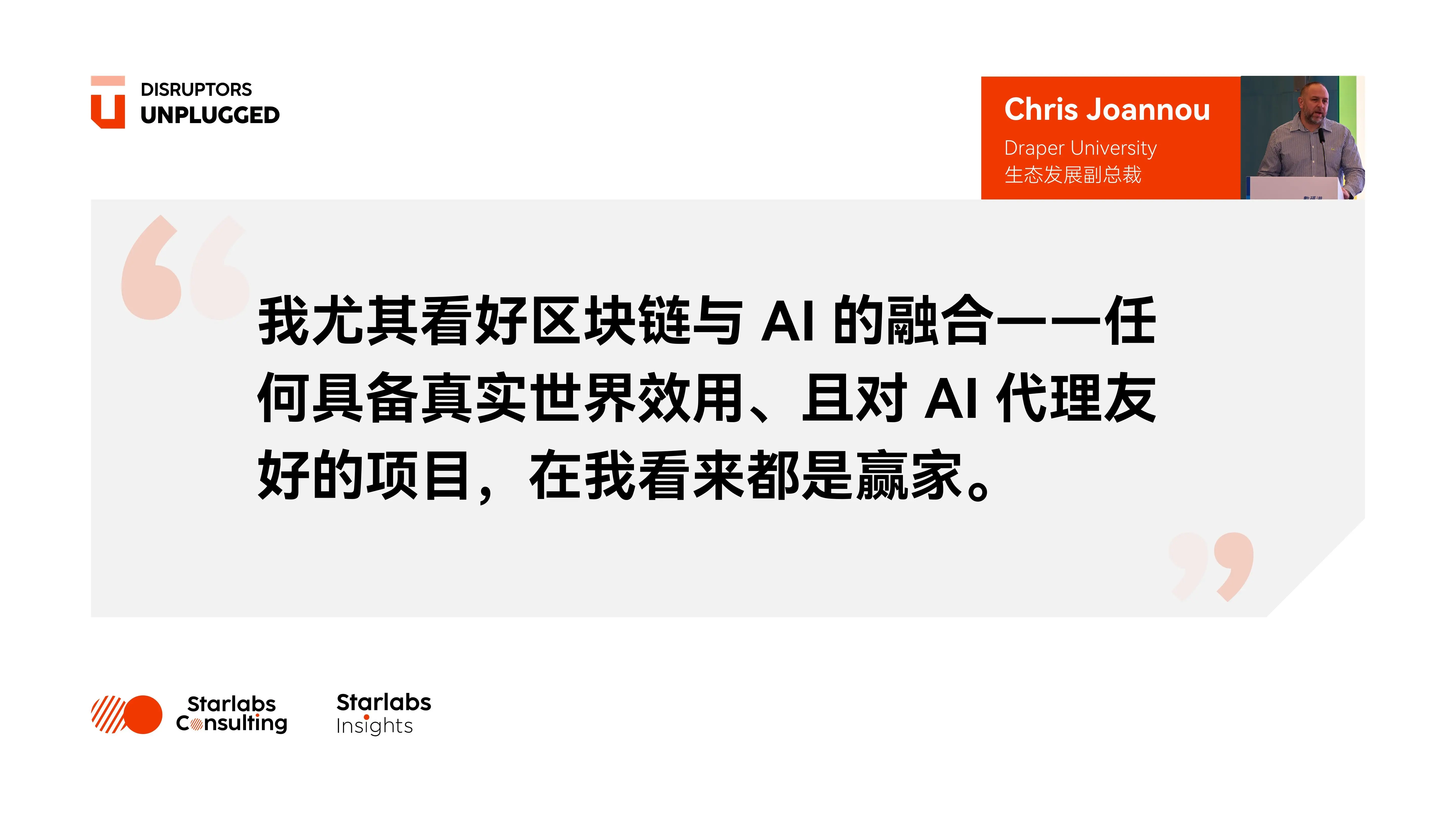
Chris Joannou: While hype cycles are the norm, the underlying practical value is maturing. I see Web3 as an indispensable "trust layer" of the next generation of the internet and a natural economic partner for AI. As we move towards the era of "agent-to-agent commerce," we need decentralized protocols to support identity verification and payment settlement. I am particularly optimistic about the integration of blockchain and AI—any project that has real-world utility and is friendly to AI agents is, in my view, a winner.
Jenny Yang: Hong Kong has actively positioned itself as a center for entrepreneurship and innovation in recent years. From your perspective, what unique advantages does Hong Kong have in the global entrepreneurial ecosystem? How do you view Hong Kong's potential as a hub for incubating the next generation of startups?
Chris Joannou: Hong Kong has a unique "super hub" status. It combines a clear business-friendly regulatory environment with Western financial infrastructure, while being adjacent to the vast market scale and strong manufacturing capabilities of the East. For any startup looking to go global while maintaining a foothold in high-growth Asian markets, Hong Kong is the preferred strategic base.
Jenny Yang: Based on your years of practice in accelerators, mentoring programs, and investment, you have had deep interactions with countless founders. When identifying truly promising founders or early-stage projects, what key qualities do you personally value the most?
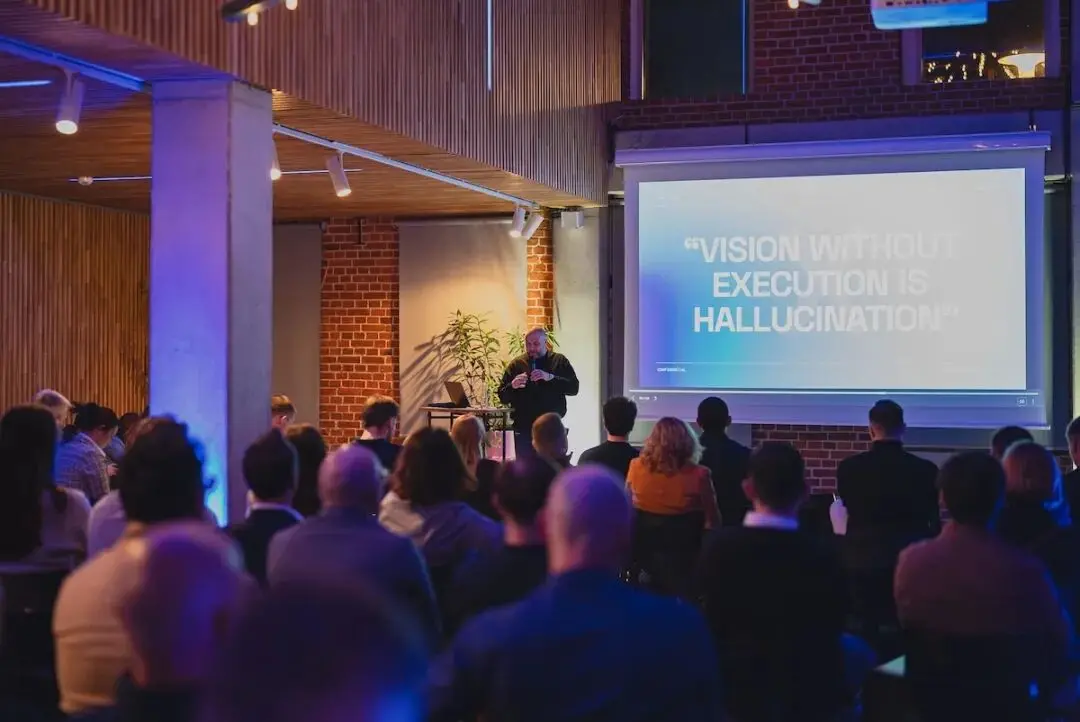
Chris Joannou: I look for a specific combination of qualities: a grand vision coupled with meticulous execution. You need a "big picture" to inspire, but also deep domain expertise to tackle detailed challenges. Most importantly, as Tim Draper says, we are looking for "missionaries" rather than "mercenaries"—those who are genuine, collaborative, and possess a sense of mission that transcends mere monetization.
(End)
Latest News
ChainCatcher
4月 1, 2026 01:12:30
ChainCatcher
4月 1, 2026 01:12:17
ChainCatcher
4月 1, 2026 01:12:04
ChainCatcher
4月 1, 2026 01:10:41
ChainCatcher
4月 1, 2026 00:44:44